Showing posts with label Ghee. Show all posts

Thursday, November 11, 2010

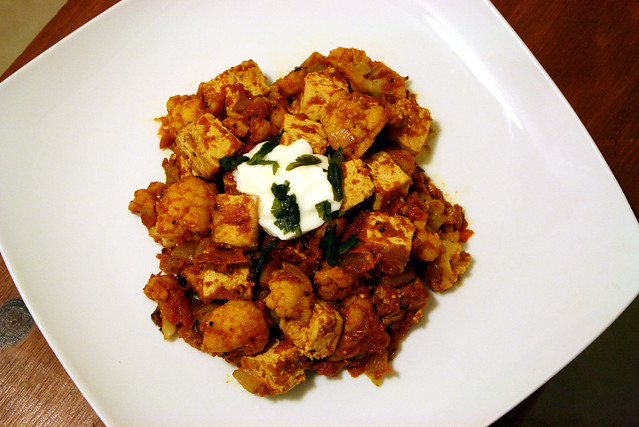
Tofu Gobi


Now that I'm back to cooking again, I wanted to enjoy a well seasoned dish. Indian food usually has a plethora of spices that meld into beautiful flavors, so I pulled out a simple dish to cook and enjoy.

Aloo gobi is an Indian dish that translates to curried potatoes and cauliflower, but I replaced the potatoes with tofu since that's what was in stock in my kitchen. This dish has me craving a local Indian restaurant that has an amazing lunch buffet. The trick is to go easy on the rice so you can fill up on all the delicious dishes they cook from scratch; and their naan bread is so soft, plus they add different herbs sometimes to make it pair with the dishes they serve that day.

The spices in this dish are paired together wonderfully, with a hint of smokiness. The tomatoes and tumeric added such a lovely flavor and color in the dish. I think this would taste even better if paneer was added or replaced the tofu.

Tofu Gobi

14 oz extra firm tofu, drained
2 tbsp ghee
1 small yellow onion, minced
4 cloves garlic, minced
1" fresh ginger, minced
2 tsp brown mustard seeds
2 tsp curry
1 tsp tumeric
1 tsp cumin
2 cups cauliflower
1/4 cup filtered water
2 tsp kosher salt
15 oz can organic diced tomatoes
1/4 cup plain cultured yogurt
1/4 cup fresh cilantro
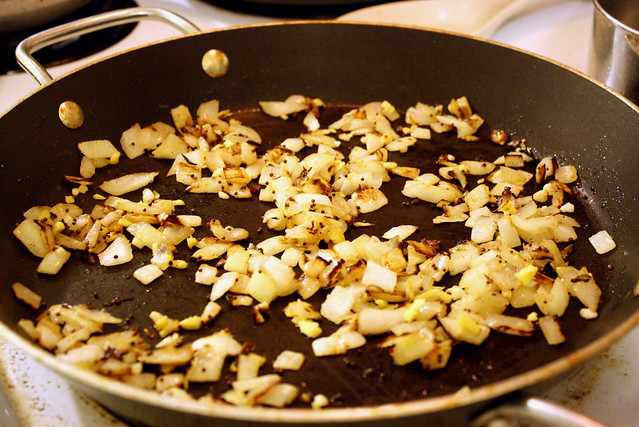

Slice the tofu in half width-wise and dry between two layers of tea towels. In a large pan over medium-high heat, add the ghee and sauté the ingredients of onion through cumin for approximately 10 min until translucent.
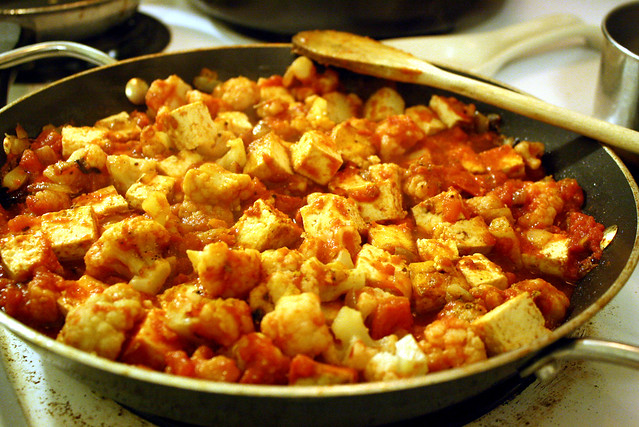

Next add the remaining ingredients and allow to steam until the liquid has evaporated, approximately 10 min. Serve over coconut rice and top each portion with 1 tbsp yogurt and cilantro.

~Yields 4 servings.

~Adapted from Cooking Light.
Wednesday, August 18, 2010

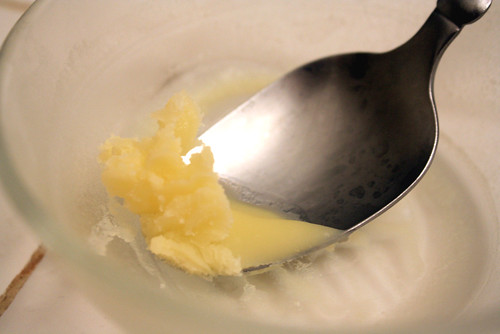
Organic Homemade Ghee

Organic Homemade Ghee

Ghee is an ancient fat, often used in Indian cooking, and one of the healthier fats to use in the kitchen.

Ghee is a clarified and nearly pure butter. Butter basically has three layers: water, fat, and milk solids. The water is simmered out and the milk solids are browned and strained out, leaving a lacto-free fat. The browned milk solids provide a nutty flavor and a pleasant depth to the ghee, and removing them from the ghee allows persons who normally cannot eat lacto or dairy foods to use and enjoy ghee in a variety of dishes. Ghee is therefore great for digestion and has been used through the ages in helping with ulcers and other digestive ailments. It is even used on burns to help reduce redness and help prevent scarring.

Since ghee is high in healthy saturated fat, it is naturally shelf stable and can be kept covered on the counter ready for use in any dish for several months (if it lasts that long); however, keeping it in the refrigerator is fine, too. Although ghee cools into a solid, it melts very quickly at low temperatures but also has a high smoke point between 325-375*F, above most temperatures needed for frying or cooking foods on high heat.

Ghee is composed of approximately 65% short-chain fatty acids of saturated fat, the healthy kind, as opposed to damaging long-chain fatty acids. It also has monounsaturated and polyunsaturated fats, as well as antioxidants from the clarification process. Plus it has four fat soluble vitamins - A, D, E, & K - meaning the body cannot absorb and utilize these essential nutrients without healthy fats.

I have not used ghee recently, although I've enjoyed it in dishes before. However, I saw the process on A Little Bit of Spain in Iowa and also need it for an upcoming food project. I want to share this basic step of making ghee to encourage its use in cooking as a healthy fat and one that's easy to make at home.

It is important to use organic butter when making ghee to ensure preservatives, lactic acid, and other additives are not present which greatly reduce the health benefits of ghee, as well as prevent it from being naturally lacto-free. And also be cautious of some ready made ghee which is often a vegetable substitute and overflowing with trans fats.

Organic Homemade Ghee
1 stick of butter
cheesecloth

Making Ghee - Step One

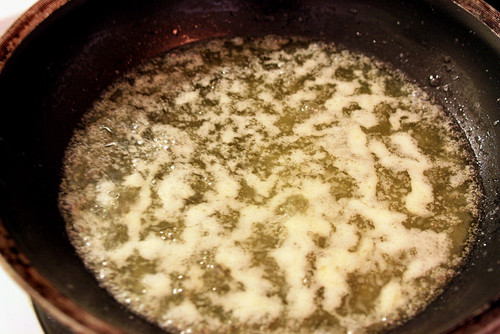
In a shallow pan, melt one stick of butter over very low heat.

Making Ghee - Step Two

Once the butter is completely melted, turn the burner up a notch or two, but do not increase the heat over the medium setting. The butter should begin to foam, hiss, and bubble very slowly, but not boil. This process of evaporating the water should take between 10-15 min, depending on the heat of the burner; however, do not rush this step. Do not stir the butter during this entire process.

Making Ghee - Step Three

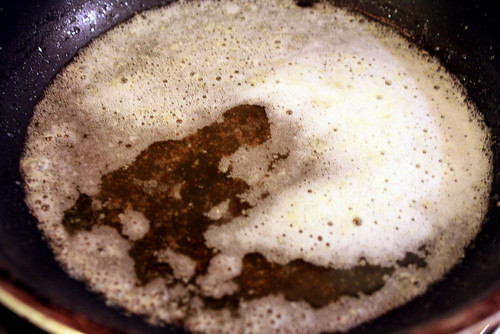
Once the water has evaporated, the butter will stop bubbling and hissing. The milk solids at the bottom of the pan will brown very quickly, so watch carefully. Using a spoon, gently push aside the foam and watch the milk solids for browning. The butter will suddenly smell very nutty when it begins to brown. Turn off the burner and remove the pan from the heat. Allow it to cool for 10 min.

Making Ghee - Step Four
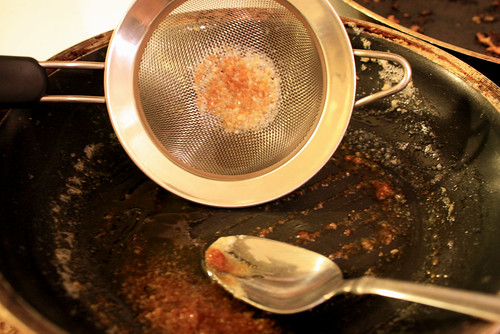
I realize this is not a cheesecloth, but I strained it twice with no real need to.
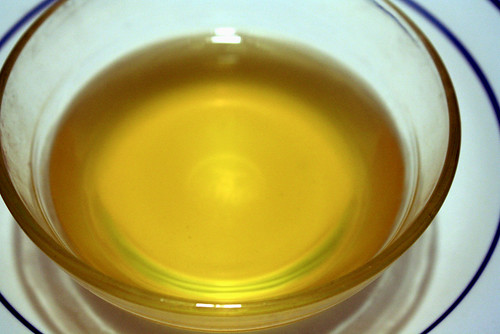
Carefully strain the ghee through a cheesecloth into a clean jar or small bowl. Store covered on the counter, refrigerator, or freezer. Also, the browned milk solids are deliciously edible and can be added to other dishes with their nutty flavor, like with scrambled eggs.

Organic Homemade Ghee

~Yields 6 tbsp ghee.